Meta AI Answers Questions. Muse Does the Work.
What if some of the opportunities you’re overlooking are already sitting in your Facebook friends list?
Most agents I work with feel pressure to keep finding new people: new leads, new farms, new platforms. Meanwhile, hundreds of people who already know and like them haven’t heard from them in a year. Nobody stopped caring. Life got busy, and staying in touch kept sliding to the bottom of the list.
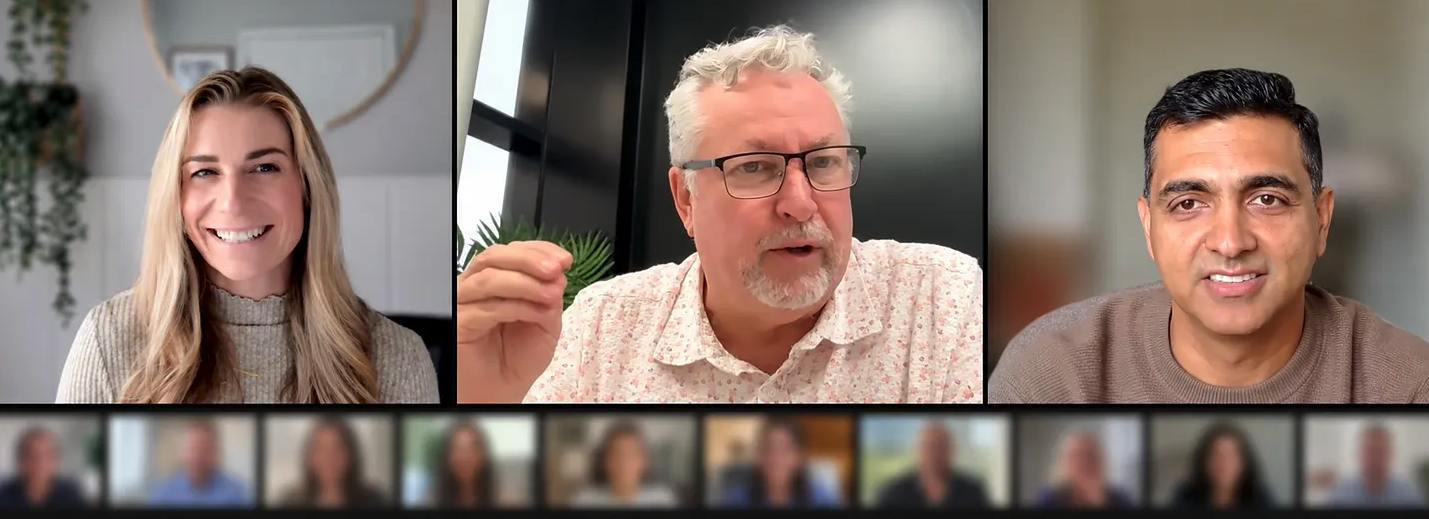
That idea drove this month’s Kickin’ It with Kerry. Eric Eltzholtz and I sat down with Anit Kuruvilla, Director of Product Strategy and Insights at Meta, to talk about Muse, Meta AI, and how agents can use AI to be more intentional with the connections they already have.
Start with who’s already there
Eric tried something simple that got the whole room’s attention. He used Meta AI to pull a list of about 700 Facebook friends whose current city is Temecula. Then he compared his Instagram followers against that list to see who appeared on both.
None of those people were new. They’re the people most of us have in our feeds, like former coworkers, neighbors, and friends of friends, mixed in with everyone else. Once they were all in one place, Eric could bring them into his CRM and see his local network clearly.
Notice the moments that matter
A list is only a start. It becomes useful when you know when to reach out.
That’s where Muse comes in. Meta AI is the chatbot already built into Facebook and Instagram. You ask, and it answers. Muse is an agent. It connects to your email, calendar, CRM, and social accounts, remembers how you work, and keeps working between conversations.
So instead of a one-time export, you can have Muse check your network on a schedule, maybe every seven days. It can flag friends who’ve moved or had a big change in their lives. Those are natural reasons to reach out, and most of us only notice them weeks later, if we notice them at all.
You can also give it a single instruction: find my local friends, add them to my CRM, and draft a personal note to anyone I haven’t talked to in six months. Muse prepares the notes, and you decide what goes out.
Personal, not mass
Anit was direct about this, and I agree with him. This is for personalization, not for blasting your sphere with the same message. If it reads like a mail merge, people will treat it like one.
The point is to show up at the right moment with something that’s actually about them.
“Congratulations on the new job.”
“How’s the new place?”
AI can spot the moment and draft the first version, but the relationship is still yours.
Let AI carry the busywork
Staying in touch usually doesn’t fall apart because we don’t care. It falls apart because it turns into one more task. Recently, Muse noticed a personal email I’d forgotten about, drafted a reply, and asked if I wanted to send it. I hadn’t prompted it. It took the initiative, but left the decision with me.
Gary, one of our attendees, connected his business email and Follow Up Boss. Now Muse drafts his replies, manages calendar conflicts, and keeps an eye on his schedule.
Where to start
You don’t need a big system to get going. The free version of Muse is enough to begin, and I haven’t hit my limit yet. Anit’s advice was to connect only what you’re comfortable with and use it a little every day. Keep passwords, one-time codes, Social Security numbers, financial account numbers, and your clients’ confidential deal terms in your own hands.
Sometimes it’s not about finding more people. It’s about reconnecting with the ones you already know.
If you want to try this hands-on, Eric and I are hosting a Muse training class next month in the Current Community.
What’s next
Enough of you asked for hands-on time that Eric and I are putting together a Muse training class next month. We’ll post it on the Current Community calendar, and we’d love to fill the Zoom room.
See you next month.
Kerry