Do You Need an IDX/MLS Website for Real Estate?
Real Estate Marketing, New Agent Tips, realestatewebsite
Do You Really Need an IDX/MLS Website to Rank and Get Real Estate Leads?
If you’re a new agent, it’s easy to believe you need an expensive, IDX/MLS-powered real estate website before you can rank on Google or capture serious Real Estate Leads. The truth is friendlier to your wallet: you don’t. You need something much simpler, cheaper, and more effective—a Branded Landing Page and a smart local content strategy you actually own.
Zillow and Realtor.com Already Own Property-Address Search
Let’s start with the big misconception. Many new agents think, “If my site doesn’t have every MLS listing, there’s no way I’ll show up on Google.” But look at your own behavior. When you type in a specific address—something like “123 Main Street, Anytown”—who shows up first? Zillow, Realtor.com, Redfin, Trulia. They have massive budgets, powerful tech teams, and years of authority built up. They own property-address search and general “homes for sale” queries in most markets.
Competing head‑to‑head with them on generic listing searches is like trying to outrun a freight train. You could spend thousands on an IDX/MLS website, custom feeds, and SEO, and still never outrank those portals for “123 Main Street” or “homes for sale in Phoenix.” That’s not a reflection of your skills; it’s just how search works. And it’s exactly why an IDX‑heavy realestatewebsite is not the magic key to ranking or generating Real Estate Leads.
What You Actually Need: A Branded Landing Page You Own
Instead of chasing what the portals already dominate, focus on what they can’t replace: you and your brand. At minimum, every agent should have a clean, modern Branded Landing Page they fully control. This is your online home base—simple, fast, and built around who you serve and how you help, not just endless property cards.
Your photo, name, brokerage, and clear positioning (e.g., “Helping first‑time buyers in North Austin”)
A short, friendly explanation of what makes working with you different
One or two strong calls‑to‑action: “Book a free consult” or “Get a custom home list”
A simple capture form so visitors can raise their hand and become a lead
This doesn’t require a complex IDX integration. In fact, removing all that clutter often makes the page convert better, because visitors see a person they can trust, not just another search box they’ve already used on Zillow.
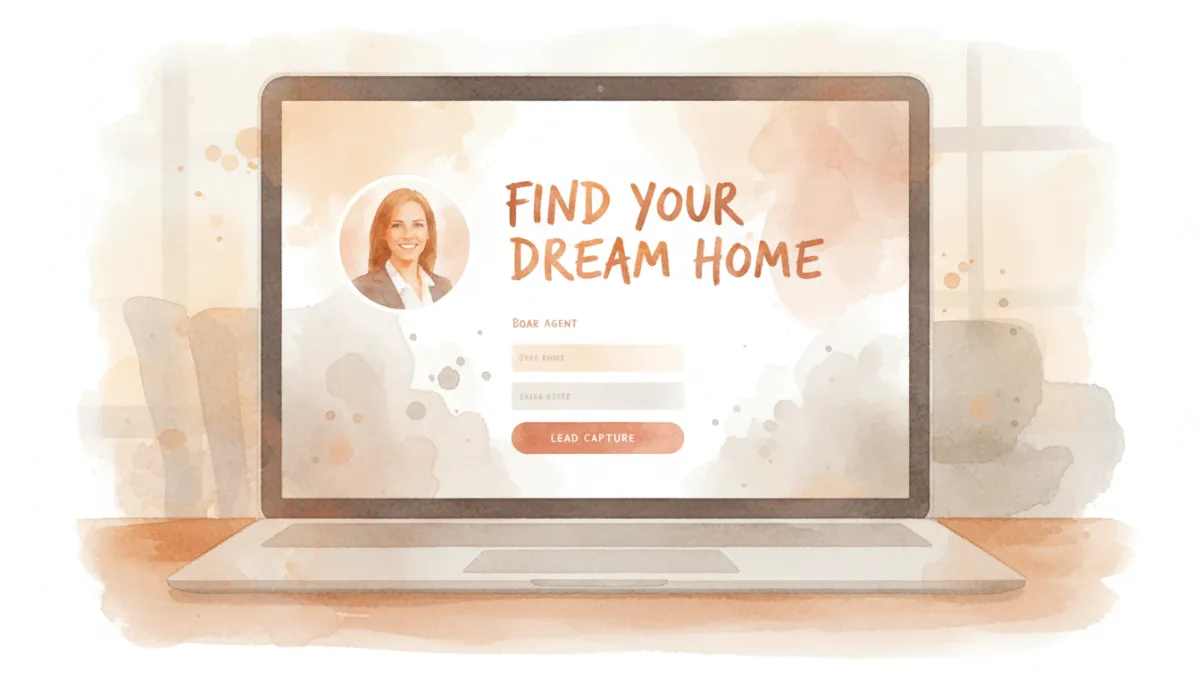
A focused branded landing page often converts better than a busy IDX site.
Local Landing Pages and Capture Forms: Where the Real Leads Come From
Once your main Branded Landing Page is live, the next step is building local landing pages around the neighborhoods, niches, and problems you actually want to rank for. Instead of trying to show every listing in the MLS, you create pages like:
“Guide to Buying a Condo in Downtown Denver”
“Moving to Frisco, TX: Schools, Commutes, and Neighborhoods Explained”
“Selling an Inherited Home in Phoenix: Step‑by‑Step for Families”
These pages answer real questions buyers and sellers are typing into Google, where Zillow is less dominant. Each page should include a relevant capture form:
“Get a custom list of downtown condos under $500K”
“Request your Frisco relocation checklist”
“Get a free inherited‑home selling plan”
Now your realestatewebsite is doing what it should: turning local visitors into warm Real Estate Leads who specifically want your help. You’re not trying to be a mini‑Zillow; you’re becoming the local expert with clear next steps.
Correcting a Costly New-Agent Misconception (and Saving You Thousands)
A lot of New Agent Tips floating around come from vendors, not working agents. It’s in a tech company’s best interest to convince you that a $300‑$600 per month IDX platform is “table stakes.” Over a few years, that can quietly add up to tens of thousands of dollars in subscription and setup fees—before you’ve even closed your first deal from it.
Here’s the misconception to drop today: “I need a full MLS-powered site to look professional and rank.” You don’t. You need a site that captures attention and contact info. A lean, well‑written Branded Landing Page with a few strong local pages will often outperform a bloated IDX site that nobody knows how to use or update.
💡 Friendly Tip: Before signing a long‑term IDX contract, ask yourself, “Could I get more leads by putting this money into ads, community events, or better follow‑up?” Often, the answer is yes.
So What Actually Drives Real Estate Leads Online?
When you strip away the hype, online Real Estate Leads usually come from a few simple ingredients working together:
A clear, trustworthy Branded Landing Page you own
Helpful local landing pages that answer real questions buyers and sellers ask
Simple capture forms with compelling offers, not just “Join my newsletter”
Consistent traffic from social media, Google Business Profile, referrals, and maybe some targeted ads
None of that requires a heavy IDX/MLS integration. If you want to add basic property search later, you can—but it should support your brand, not define it. Start with the foundation that actually moves the needle: a realestatewebsite that tells your story, serves your local market, and makes it easy for people to contact you.
Final Word: Build a Business, Not Just a Search Box
You became an agent to build relationships and help people move into their next chapter—not to fund someone else’s tech stack. By skipping the “must‑have” IDX myth and starting with a strong Branded Landing Page, focused local landing pages, and smart capture forms, you keep control of your budget and your brand. Let Zillow and Realtor.com own property‑address search. You can own something far more valuable: a memorable presence that turns local visitors into loyal clients.